
Self-study has become the go-to strategy for thousands of SSC CGL aspirants who prefer flexibility, affordability, and the freedom to learn at their own pace. But the very independence that makes online preparation attractive can also become its biggest trap. Without a mentor or structured classroom to keep you accountable, it’s easy to fall into habits that quietly sabotage months of hard work.Score Card 2026
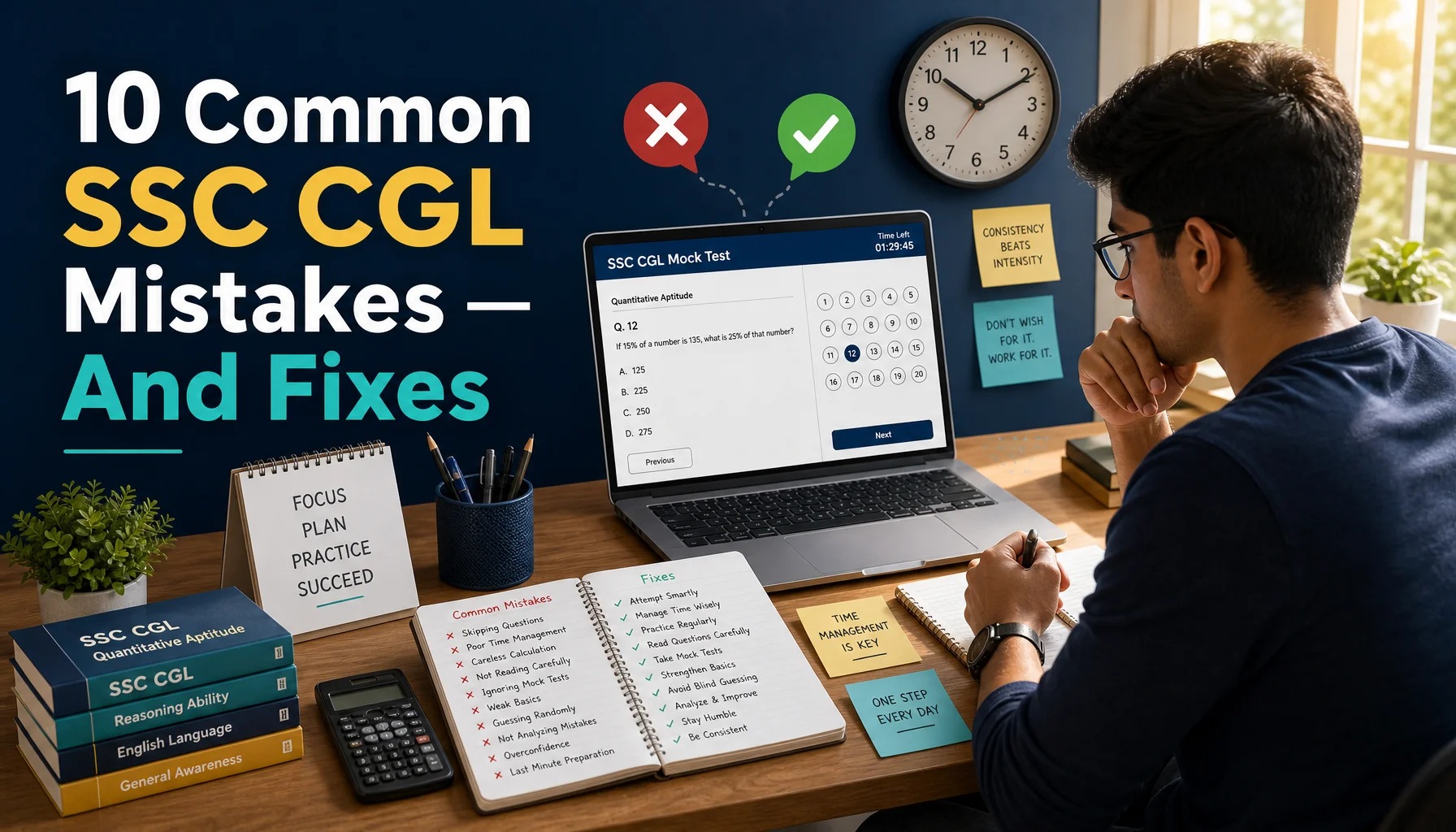
In this article, we take an honest look at the ten most common mistakes online SSC CGL aspirants make—and, more importantly, exactly how to fix each one. Whether you’re just starting or already deep into your preparation, these insights can save you time, stress, and a lot of frustration.
1. Over-Collecting Study Resources
The internet is overflowing with free PDFs, YouTube playlists, Telegram channels, and paid courses. Many aspirants spend more time downloading materials than actually studying them. This “resource hoarding” creates a false sense of productivity.
The Fix: Choose one reliable book or course per subject and one trusted online source for updates. Stick with them. Mastering a few quality resources beats skimming through dozens.teaching jobs
2. Skipping a Study Plan
Studying whatever feels interesting on a given day leads to uneven preparation. You might over-study Quantitative Aptitude while neglecting English or General Awareness.
The Fix: Build a weekly timetable that covers all four sections proportionally. Break the syllabus into small, trackable goals and review your progress every Sunday.
3. Ignoring the Exam Pattern and Syllabus
Some aspirants dive straight into topics without understanding what SSC actually tests. This results in wasted effort on low-weightage or irrelevant areas.
The Fix: Print out the official syllabus and Tier-I & Tier-II exam patterns. Keep them visible on your desk. Prioritize high-weightage topics like simplification, DI, error spotting, and static GK.Bank PO
4. Neglecting Mock Tests
Reading and watching lectures feels comfortable, but exams are won through practice under pressure. Many self-study aspirants delay mocks until “they feel ready”—which often means never.
The Fix: Start taking sectional tests early and full-length mocks at least 8–10 weeks before the exam. Treat every mock as the real thing: same time, same duration, no distractions.
Why Mock Analysis Matters More Than the Score
Taking a mock is only half the job. The real growth comes from analyzing your mistakes.
- Identify recurring error types (silly mistakes vs. conceptual gaps).
- Track your time spent per section.
- Note which topics consistently pull your score down.
5. Skipping Revision
This is perhaps the deadliest mistake. Aspirants learn a topic, feel confident, and move on—only to forget it weeks later. Without revision, learning simply doesn’t stick.
The Fix: Maintain short revision notes or formula sheets for each subject. Dedicate one day a week purely to revision, and revisit static GK and vocabulary daily in small doses.
6. Mugging Up Instead of Understanding
Memorizing shortcuts without understanding the logic behind them works only until the question is slightly twisted. This is common in Quant and Reasoning.
The Fix: Learn the concept first, then the shortcut. When you understand why a formula works, you can adapt it to any variation the exam throws at you.
7. Ignoring Speed and Accuracy Balance
SSC CGL is as much about time management as knowledge. Some aspirants solve accurately but too slowly, while others rush and make careless errors due to negative marking.
The Fix: Practice with a timer for every session. Aim to identify “easy,” “medium,” and “leave-it” questions within seconds. Learn when to skip a question instead of getting stuck.
8. Underestimating English and General Awareness
Many science and math-oriented aspirants focus heavily on Quant and Reasoning, treating English and GA as afterthoughts. But these sections are highly scoring and quick to attempt.
The Fix: Read editorials daily to build vocabulary and comprehension. For GA, follow a consistent current affairs source and revise static topics like history, polity, and science regularly.
9. Poor Consistency and Burnout
Self-study aspirants often swing between extremes—studying 12 hours one day and skipping the next three. This inconsistency destroys momentum and leads to burnout.
The Fix: Consistency beats intensity. Study 5–6 focused hours daily rather than marathon sessions. Include short breaks, physical activity, and adequate sleep to keep your mind sharp.
10. Studying in Isolation
Without peers or mentors, doubts pile up and motivation dips. Many aspirants struggle silently instead of seeking help.
The Fix: Join online study communities, discussion forums, or a small peer group. Discussing problems clarifies concepts, exposes you to new tricks, and keeps you accountable.
Building a Smarter Self-Study Routine
Fixing these mistakes isn’t about working harder—it’s about working smarter. A well-rounded routine should combine:
- Learning: Concept-building through quality resources.
- Practice: Daily topic-wise questions and regular mocks.
- Revision: Weekly cycles to lock in what you’ve learned.
- Analysis: Honest review of weaknesses and progress.
When these four pillars work together, your preparation becomes far more efficient and exam-ready.
Conclusion
Self-study for SSC CGL is entirely achievable—thousands of aspirants clear the exam every year without coaching. The difference between those who succeed and those who don’t often comes down to avoiding these common pitfalls. Focus your resources, follow a plan, revise relentlessly, and practice under exam conditions. Stay consistent, seek support when needed, and treat every mistake as a lesson rather than a setback. Do this, and your online preparation will be more than enough to help you crack the exam with confidence.

About the Author
kasi muraliprasad
A dedicated content writer specializing in government job notifications and results. With two years of experience covering SSC, UPSC, Banking, Railways, and State PSC examinations, he delivers reliable, well-researched updates tailored for serious government job aspirants.